// Liner notes
The debut that answers the 1932 Congress of Arab Music, premiered in the same Cairo hall where that congress was held.
Released June 3, 2022 via Simsara Records, Nozhet El Nofous ("Promenade of the Souls") is Nancy Mounir's debut and a séance in sound. Mounir sets her own arrangements against eight brittle 78 RPM recordings of Egyptian singers and theatre stars from the early twentieth century, playing every instrument herself: guitars, violin, double bass, piano, theremin. The voices reach her across a century: Naima El Masreya's "Taala Ya Shater" opens the record, followed by Saleh Abdel Hay's "Khafif Khafif," Abdel Latif El Banna's "Matkhafsh Alayya," Mounira El Mahdeya's "Baad El Esha," Hayat Sabri's "Wallah Testahel Ya Albi" and Fatma Serry's "Ana Bas Saktalak," all sung for shellac in the 1920s. The result is moody, hypnotic and quietly catchy, built on microtonality, unmetered rhythm and a vulnerability she never covers up.
She works in the gaps the old shellac left behind, the frequencies lost to age and hiss, and finds room there for counterpoint and harmony in a tradition built on a single melodic line. She wraps Abdel Hay's gender-fluid delivery on "Khafif Khafif" in organ drones and bass-heavy strings. Piano and flute trace the intricate melody Mounira El Mahdeya left on "Baad El Esha," and swelling plucked strings and theremin answer Fatma Serry's mix of swagger and despair. On "Matkhafsh Alayya" Mounir clears space around El Banna, leaving his voice almost bare at the front of the mix while the violins circle behind him like mourners. Melodies unfold in slow, measured gestures around the plaintive bends and brazen lyrics of the departed singers. The layers knit so tightly it is often hard to hear where the 1920s crackle ends and the present begins, and under all of it runs a defiance that refuses to date.
The record forms a counter-argument to that congress. In 1932 the Congress of Arab Music met at Cairo's Institute of Arab Music and set about standardizing maqam and the rules around it, and the freewheeling popular singers of the 1920s were left outside that project. Mounir premiered Nozhet El Nofous in that same institute in October 2021, bringing their voices back into the room that shut them out. Neither deconstruction nor nostalgia, it is thirty-four minutes of empathy across a century. NPR Music named it one of the best experimental albums of 2022, Lars Gotrich calling it "a conversation with the past."
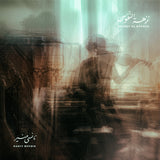
Mixed by Adham Zidan, mastered by Heba Kadry. Artwork by Egyptian filmmaker and photographer Ahmad Abdalla, original typography and design by Salma Shamel, lyrics translated by Katharine Halls.
First vinyl pressing, issued in 2025 by Holidays Records (HOL142), limited to 500 copies on black vinyl, remastered for vinyl by Matt Bordin at Outside Inside Studio, with an 8-page booklet of lyrics in English and Arabic.
Specs
- Format
- LP, Vinyl, Black, Limited Edition, 500 Copies, Booklet
- This pressing
- 2025 First Vinyl Pressing
- Original release
- 2022
- Label
- Holidays Records
- Genre
- Experimental / Ambient / Arabic / Tarab
Tracklist
- 1Taala Ya Shater
- 2Khafif Khafif
- 3Matkhafsh Alayya
- 4Baad El Esha
- 5Wallah Testahel Ya Albi
- 6Ya Einak Ya Gabayrak
- 7Ana Bas Saktalak
- 8Gannentini